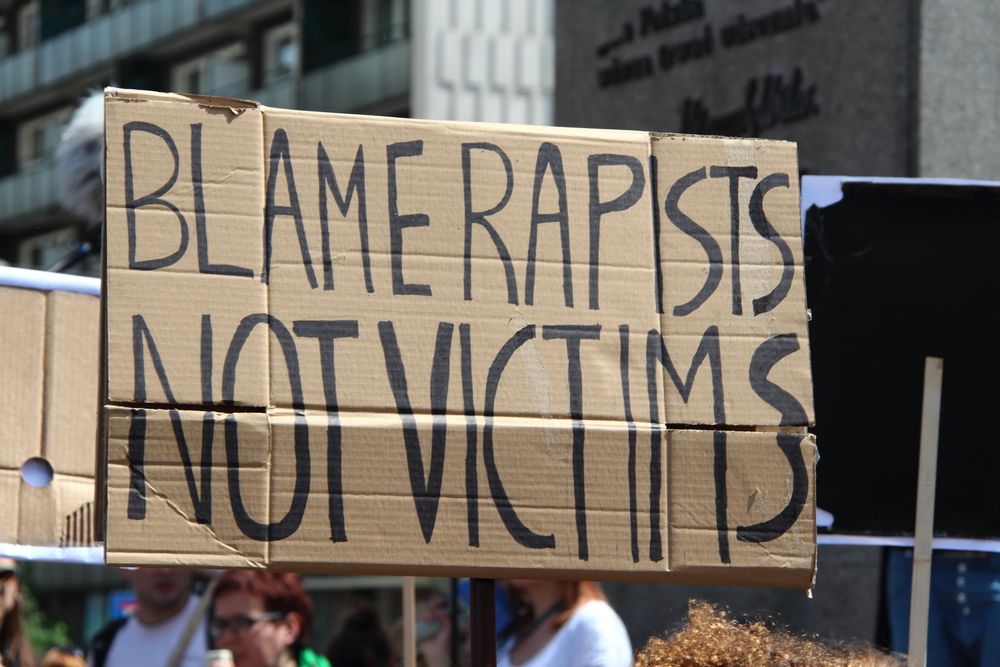
1 in 3 women have been physically/ sexually assaulted at least once in their lifetime.
1 in 6 children are sexually abused.
6 in 7 rapes of women are performed by a person they know.
And these are only the reported ones. In India, many women refuse to report their experiences of rape or sexual assault due to the social stigma surrounding the topic. The survivors are considered to lose their dignity and value after experiencing such an event, and often, the perpetrator is someone who is known to the victim – such as a family member, friend, teacher, etc.
A very common excuse a lot of rapists use is “She smiled at me”, or that the victim had not protested enough. A real life example of the latter is the Mahmood Farooqui vs State (Nct of Delhi) case where on the 25th of September, 2017, Farooqui was acquitted by the Delhi High Court and given the benefit of doubt, stating that “A feeble no may be interpreted as a yes.” This goes against IPC Section 90, which stated that “A consent is not such a consent as it intended by any section of this Code, if the consent is given by a person under fear of injury, or under a misconception of fact, and if the person doing the act knows, or has reason to believe, that the consent was given in consequence of such fear or misconception.”
This is a clear example of why many victims refuse to speak up about their personal experiences with rape or sexual assault. The High Court of Delhi misinterpreted IPC Section 375 and considered Section 90 invalid due to the accused’s apparent lack of awareness. When the legal system has failed multiple others before, how can one be expected to go to it for support?
Submission is not consent. For many cases worldwide, whether reported or not, it is not uncommon for the victim to be blamed and ostracised due to speaking up about their experience. “Why did you not push them off?” “Why did you smile at them?” “Why were you friendly?” These are commonly asked questions to the victims. A friendly demeanor, a smile, cannot be equivalent to consent. A notable example for this is the 1975 Somer vs State of Oklahoma case, in which the accused had stated that the victim supposedly had a friendly demeanor and never objected when he placed his hand on her thigh during a car ride. This interaction was what was used as a claim of consent.
Is basic respect considered an invitation? Does a smile allow someone to assault you? To strip you of your bodily autonomy? Our world runs on kindness. Without the kindness of one person, at least once in our lives, many of us would not be where we are today, whether it’s the kindness of a random stranger who chose to help you out when you were distressed, or whether it was a wave someone gave to you the other day. Even the smallest gestures matter, and if those small gestures are considered an invite to disregard one’s bodily autonomy and rights, what have we made of ourselves?


Leave a comment